


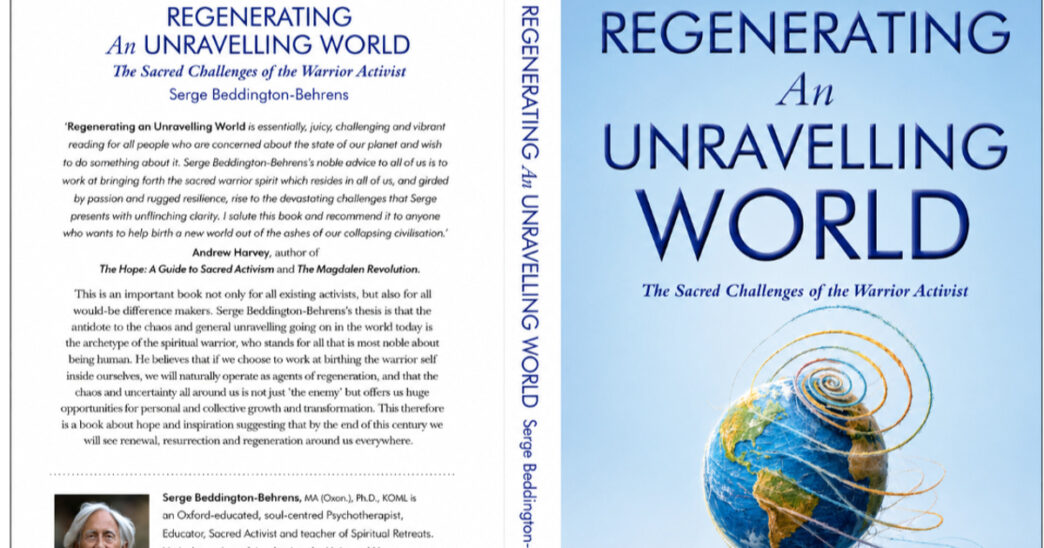
What if the primary challenge facing modern humanity is not found in political gridlock, global conflict, or the climate emergency, but in the pervasive loss of the human soul? This inquiry serves as the foundation for the latest work by distinguished psychotherapist, educator, and author Serge Beddington-Behrens. In his new release, ‘Can a Sacred Activist Change the World? New Book Challenges Readers to Confront Today’s Greatest Crises with Courage, Compassion and Action’, the author posits that the path forward requires ordinary individuals to assume the mantle of the Sacred Activist rather than waiting for political leadership to resolve systemic instability.
Merging the disciplines of psychology, philosophy, and spiritual practice, the book provides a framework for how personal consciousness and social responsibility must intersect to navigate contemporary challenges. Beddington-Behrens utilizes over fifty years of professional experience to argue that modern afflictions such as environmental degradation, inequality, and the rise of authoritarianism are direct manifestations of a civilization disconnected from the sacred. “The crises in our world today are all crises resulting from a lack of soul. Soul needs to return to the world,” Beddington-Behrens asserts.
Rather than viewing global instability through a lens of inevitability, the text reframes the decay of current systems as a vital window for collective evolution. “Our current systems may be unravelling,” he argues, “but this does not mean humanity is doomed. The collapse of outdated ways of thinking creates the opportunity for something wiser, kinder and more conscious to emerge.” 
Central to the narrative is the redefined archetype of the Sacred Warrior. Drawing influence from Zen Buddhism, the history of the Samurai, and the mythology surrounding King Arthur’s Knights of the Round Table, the author advocates for a form of activism that is inherently protective of noble ideals. He asserts that democracy requires active defense to survive, and encourages readers to integrate deep inner transformation with external, courageous public service. This book represents a significant manual for those seeking to participate in the restoration of a healthier global collective.